- Call Us: +90 (532) 266 27 16
- Opening Hours: Sunday - Friday, 09:00 - 21:00

How to Choose Hair Color for Your Skin Tone and Undertone
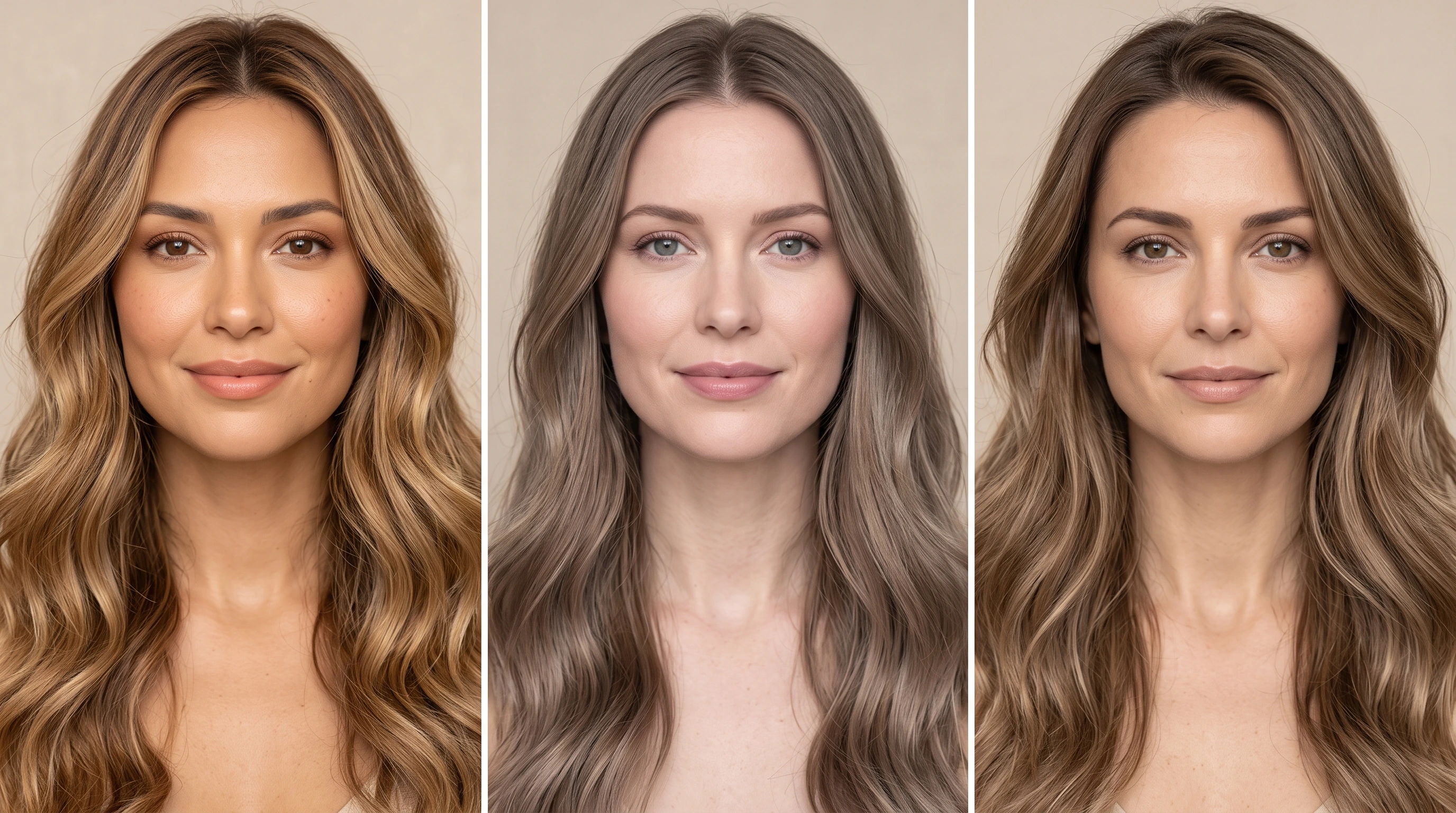
A better approach is to consider your skin undertone, natural hair color, eye color, the amount of contrast you want and how much maintenance you are comfortable with.
Warm, cool and neutral undertones can make the same hair color look very different from one person to another.
This is why choosing a hair color is not simply about selecting a shade from a chart. The goal is to find a color direction that works with your natural features and the condition of your hair.
What Is a Skin Undertone?
A skin undertone is the underlying color tone beneath the surface of the skin.
It is generally described as:
Warm
Cool
Neutral
The surface tone of the skin can change with tanning, sun exposure or the season, while the undertone usually remains more consistent.
This underlying tone can influence how warm, cool or neutral hair colors appear next to the face.
How Can You Identify Your Skin Undertone?
There is no single test that works perfectly for everyone.
It is more useful to look at several signs together.
Look at the Veins
If the veins around the wrist appear more green, this may suggest a warm undertone.
If they appear blue or purple, this may suggest a cool undertone.
Lighting and skin depth can affect how the veins appear, so this should not be used as the only test.
Compare Gold and Silver Jewellery
If gold jewellery tends to look more harmonious against the skin, the undertone may lean warm.
If silver appears more balanced, the undertone may lean cool.
If both work equally well, a neutral undertone may be possible.
Compare White and Cream
Bright white clothing may suit cooler undertones, while cream or off-white may appear softer on warmer undertones.
Again, these are useful indicators rather than strict rules.
Professional hair color planning should also consider natural hair color, contrast and the overall coloring of the face.
Which Hair Colors Can Suit Warm Undertones?
Warm undertones often work well with hair colors that contain golden, honey, caramel or warm brown directions.
Possible options include:
Honey blonde
Golden blonde
Caramel
Warm light brown
Chocolate brown
Copper
Cinnamon tones
Golden brown
However, having a warm undertone does not mean everyone should choose the same warm shade.
For example, someone with naturally dark brown hair may prefer subtle caramel dimension, while someone with naturally lighter hair may be able to move toward softer golden blonde tones.
Which Hair Colors Can Suit Cool Undertones?
Cool undertones may work well with ash, beige, neutral and cooler color directions.
Examples can include:
Ash brown
Cool brunette
Ash blonde
Beige blonde
Cool chocolate
Mushroom brown
Dark ash tones
Platinum-inspired lighter shades
Very light and cool colors may not always be achievable in one appointment.
Dark or previously colored hair may require lightening before certain cool blonde or ash shades can be reached.
For this reason, the condition and existing color of the hair matter just as much as the desired shade.
Are Neutral Undertones More Flexible?
Often, yes.
Neutral undertones can work with a wider range of both warm and cool shades.
However, this does not mean every hair color will create the same effect.
With neutral undertones, other factors become especially important:
Natural hair color
Eye color
Eyebrow color
Desired contrast
Makeup preferences
Maintenance expectations
Someone who wants a softer result may prefer neutral browns or beige tones, while someone looking for more contrast may choose a noticeably lighter or darker shade.
Which Hair Colors Can Suit Fair Skin?
For fair skin, undertone and contrast are both important.
Cool fair skin may work well with ash blonde, beige blonde, cool light brown or deeper ash brown shades.
Warm fair skin may suit honey, golden blonde, warm light brown, caramel or copper directions.
A very dark hair color against very fair skin creates strong contrast and can make facial features appear more defined.
That can be intentional.
For a softer result, choosing a shade closer to the natural hair color may create a more blended appearance.
Which Hair Colors Can Suit Medium or Olive Skin?
Medium and olive skin tones can work with a broad range of hair colors.
The undertone remains the main guide.
For warmer medium or olive skin, options may include:
Caramel
Honey
Warm brunette
Golden light brown
Warm balayage tones
For cooler or neutral undertones, options may include:
Ash brown
Beige brunette
Cool chocolate
Ash balayage
Neutral brown
Keeping some depth close to the natural hair color can also help create a lower-maintenance result.
Which Hair Colors Can Suit Deeper Skin Tones?
Deeper skin tones can work with both subtle and high-contrast hair colors.
For a more blended result, shades such as:
Deep chocolate
Warm brunette
Caramel
Mocha
Deep light brown
Honey or caramel highlights
may be considered.
Lighter blonde or ash shades can also be possible, but the contrast will be more noticeable.
If the natural hair is very dark, lightening may be required to reach significantly lighter shades.
In that situation, hair strength and the condition of the hair should be considered alongside the color goal.
Does Eye Color Affect Hair Color Choice?
It can, but it should not be the only deciding factor.
Hair color can be selected to create more contrast around the eyes.
For example:
Hazel and green eyes may be emphasised by warm brunette, copper or caramel tones
Blue and grey eyes may work well with ash, beige or cooler shades
Brown eyes can work with a wide range of warm and neutral browns, caramel and lighter dimensional tones
Skin undertone and natural hair color are usually stronger factors than eye color alone.
Why Does Your Natural Hair Color Matter?
The starting color of the hair has a direct impact on what can realistically be achieved.
For example, moving from naturally dark hair to a very light ash blonde is a very different process from moving from a light brown base to the same target shade.
Previous color services can also affect the result.
When planning Hair Coloring, factors such as the following should be considered:
Natural hair color
Current artificial color
Previous color layers
Previous lightening
Percentage of grey hair
Hair strength
Desired level of lightness
Reference photos can be useful for showing the color direction you like, but the final result still depends on the current base and condition of the hair.
Can Balayage Be Chosen According to Skin Tone?
Yes.
Instead of changing the entire hair color, lighter and deeper tones can be placed strategically to create a softer relationship between the hair and the complexion.
Balayage may be considered by people who want to:
Add brightness around the face
Create more dimension
Keep softer transitions
Preserve more of the natural root color
Warm undertones may work well with caramel, honey and golden directions.
Cool undertones may work well with beige, ash or cooler dimensional tones.
The exact shade should still be planned according to the existing hair color.
How Important Is Contrast When Choosing Hair Color?
Contrast refers to the difference in lightness or darkness between the hair and the skin.
Lower-contrast choices can look softer and more blended.
Higher-contrast choices create a more noticeable result.
For example:
Fair skin with dark hair creates high contrast
Deep skin with very light blonde creates high contrast
Medium skin with medium brown hair creates lower contrast
High contrast is not automatically a bad choice.
The important question is whether the goal is a subtle, natural-looking result or a stronger visual change.
Should Maintenance Affect Your Hair Color Choice?
Yes.
A hair color needs to work not only on the day it is applied, but also as it grows out and fades.
A color that is very different from the natural hair may make root growth more visible.
For example, very light blonde on naturally dark hair may require more frequent root or toning appointments.
For people who prefer lower maintenance, options may include:
Shades closer to the natural hair color
Softer balayage transitions
More natural-looking root areas
Colors that can be refreshed mainly through toning
A good hair color choice should therefore consider both appearance and maintenance.
Common Mistakes When Choosing a Hair Color
One of the most common mistakes is choosing a color only because it looks good in a reference photo.
Other common mistakes include:
Ignoring skin undertone
Ignoring the existing hair base
Expecting an identical result from a reference image
Expecting very dark hair to become very light in one appointment
Forgetting about maintenance
Prioritising the target color over the condition of the hair
A color may be technically possible but still not be the most appropriate option for the current condition of the hair.
Hair Color Consultation at Luxus Hair Group
Hair coloring at Luxus Hair Group is not planned around a single standard formula for every client.
Before the service, the natural hair color, previous treatments, desired shade, hair condition and maintenance expectations can be assessed together.
Depending on the goal, the service may include:
Root color
Full hair color
Glossing or toning
Color balancing
Balayage
Ombre or sombre
Lightening
Some color changes can be achieved in one appointment, while others may require a more gradual approach depending on the starting base and the condition of the hair.
Hair coloring services are available at the Galata and Karaköy salons.
LUXUS Galata
Müeyyetzade, Galip Dede Cd. No: 97B
34425 Beyoğlu, Istanbul
LUXUS Karaköy
Arap Cami, Tersane Cd. No: 2
34421 Beyoğlu, Istanbul
Frequently Asked Questions About Hair Color and Skin Tone
What hair color suits my skin tone?
Skin tone alone is not enough to determine the most suitable shade. Skin undertone, natural hair color, eye color and desired contrast should be considered together.
Which hair colors suit warm undertones?
Honey, caramel, warm brunette, golden blonde and copper directions may work well with warm undertones.
Which hair colors suit cool undertones?
Ash brown, beige blonde, cool brunette and other cooler or neutral shades may suit some cool undertones.
What hair colors suit medium or olive skin?
Depending on the undertone, caramel, warm brown, beige brunette, ash brown and dimensional balayage shades may all be considered.
Can deeper skin tones wear blonde hair?
Yes. Lighter blonde shades can create stronger contrast on deeper skin tones. The starting hair color and the condition of the hair determine how the lightening process should be planned.
Should I consider my eye color when choosing hair color?
Yes, but it should be treated as a supporting factor rather than the main decision point. Skin undertone and natural hair color are usually more important.